
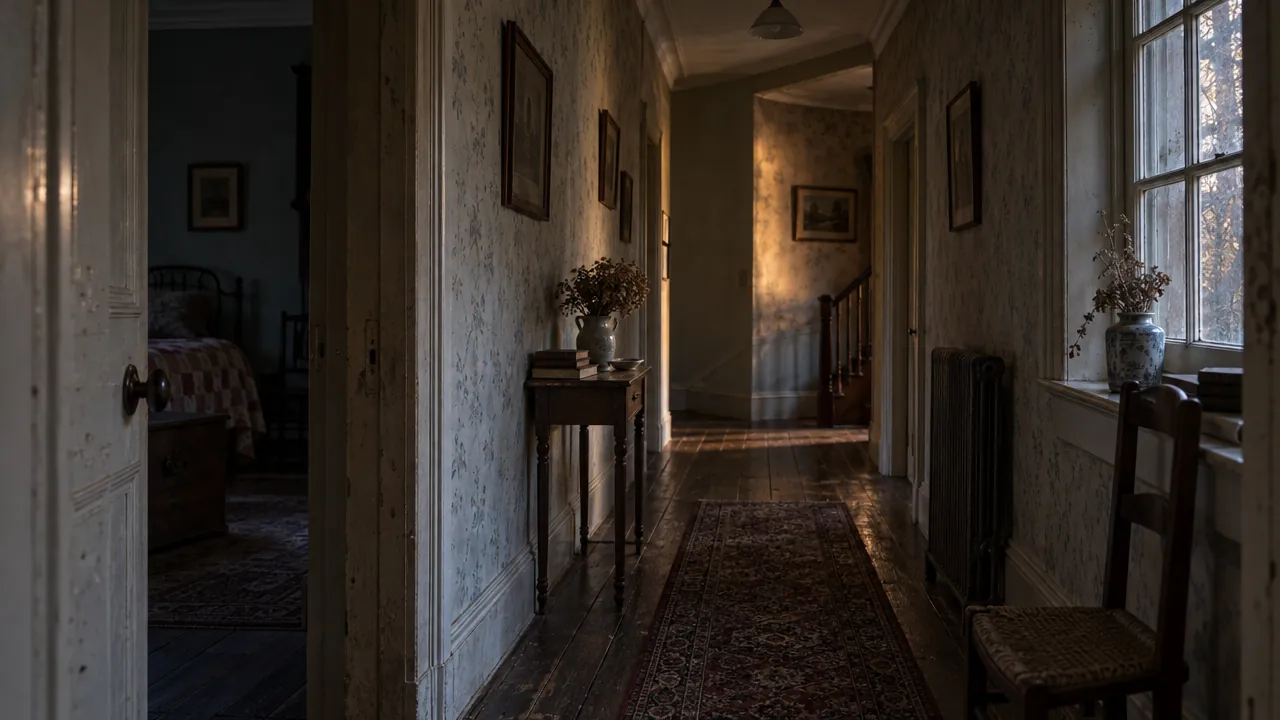
A haunted house can be a castle, an estate or an ordinary building made strange by what happened there. Gothic stories return to such places because a house can represent a family line, inherited wealth and wrongdoing that refuses to stay buried. For a writer, this familiar setting gives private fears a physical form. Doors, corridors and rooms can conceal a mystery while keeping characters close to what they fear. Understanding the conventions behind that arrangement makes it easier to decide which ones a new story needs.
Why ghosts remain compelling
Stories about the dead long predate the Gothic novel. According to Smithsonian Magazine, a Babylonian tablet dating to around 3500 BC gives instructions for returning an unwanted spirit to the underworld. In first-century Rome, Pliny the Younger wrote about a chain-rattling ghost haunting a house. Though separated by centuries, both accounts imagine a presence that has not departed when the living expect it to.
That possibility has an emotional force as well as a frightening one. People know they will die and lose others, yet cannot know with certainty what becomes of the dead. Religious beliefs, private theories and the habit of reading signs into everyday encounters all offer responses to that uncertainty. A bird appearing at a significant moment, for instance, might be interpreted as a reminder of someone who has died. A ghost story can make such an encounter comforting, unsettling or impossible to explain.
Old buildings and dark woods can create the feeling that someone unseen is nearby. Fiction gives that sensation a shape: a sound might have an ordinary cause, or it might point towards a truth the characters do not yet understand. Keeping both possibilities alive allows a story to offer suspense alongside questions about memory, grief and the hope that death is not a final separation.
How the house became a Gothic setting
Horace Walpole’s The Castle of Otranto, published in 1764 under the name William Marshall, is widely regarded as the first haunted-house novel. At about 85 pages, it is closer in length to a novella. Its structure resembles a five-act play, and Walpole acknowledged the influence of William Shakespeare. The castle is more than a backdrop: its fate is bound to a lord’s threatened family line and the consequences of its past.
A curse hangs over the castle; ghosts seek vengeance; dreams warn of what may come; and innocent people face the cost of earlier sins. Romance and terror sit alongside sex, violence, murder and a mystery that drives the plot. The story combines apparently realistic events with supernatural ones as its characters struggle over the fate of the family. Each uncanny event therefore matters to the conflict, rather than merely making the building seem frightening.
Walpole feared that educated readers during the European Enlightenment would reject ghosts and curses as childish superstition. He presented the first edition as a translation by a 15th-century Italian monk of a much older medieval account. This invented scholarly framing gave his fantastical story the appearance of a historical document. The book proved popular, and its combination of inherited guilt, endangered innocence and uncanny events remained influential long after that disguise was dropped.
The elements of a haunted-house story
Gothic fiction developed across different places and forms after Walpole. In the American Gothic tradition, European castles gave way to decaying robber-baron estates, plantations marked by brutality, secretive religious orders, mental institutions and remote farms. A tenement in China could likewise serve as a setting. The architecture need not match: what matters is how a place contains its history, restricts its occupants and makes hidden conflicts difficult to escape.
An isolating setting
Decay suggests that something has gone wrong long before the story begins. It might be visible in crumbling stonework or expressed through the decline of a family or institution. Gloom and confusing, maze-like spaces make it harder for characters to tell where a threat might appear. Isolation adds pressure: a place cut off from ordinary society gives its occupants fewer people to turn to. Its layout and condition can build suspense without making every room overtly supernatural. Even a familiar corridor may become troubling when a character cannot see where it leads or who might be waiting there.
Signs of a haunting
A Gothic haunting need not begin with an unmistakable apparition. Unexplained events can leave characters unsure whether they face a literal ghost, a psychological disturbance or a metaphorical return of the past. That uncertainty matters when a building already holds a troubling history: each strange occurrence can make a previously overlooked detail seem important. The supernatural may eventually become clear, but hints alone can keep characters and readers searching for an explanation. What seems like evidence to one occupant may still look like coincidence to another.
A buried wrong
The haunting often grows out of an earlier immoral act whose effects still reach the present. A fortune, someone’s freedom, a place regarded as sacred or a life may have been taken. The house conceals the act while preserving its consequences for later occupants. Classic Gothic fiction also used sexual transgression and hints of incest to shock readers. The central question for a writer is how the hidden wrong connects the strange events to the choices characters now face. Discovering a secret should change their understanding of the house, not simply supply an explanation at the end.
Unequal power
Fear is sharpened when one side has the power to harm and the other has little protection. In a Gothic story, the household or institution may command money, social standing and knowledge that an outsider lacks. Its authority can make accusations difficult to challenge and secrets difficult to uncover. Conflict between social classes gives the haunting another dimension: the person entering the house may recognise an injustice that those in charge have hidden, denied or accepted. The threat lies partly in how hard it is for that person to be believed.
An outsider who cannot easily leave
From The Castle of Otranto to Mexican Gothic, an outsider entering a dangerous household gives readers someone through whom to discover its rules and secrets. Whether lured inside or held there by circumstances, that character must learn what happened if escape is possible at all. Earlier works such as The Mysteries of Udolpho and The Turn of the Screw often placed a young woman in this position, but the role does not depend on that particular character type. What matters is the gap between what the newcomer knows and what the house keeps hidden. Each discovery can make leaving seem both more urgent and more difficult.
A moral confrontation
A Gothic mystery is not resolved simply by identifying a noise or finding a secret passage. Its buried act raises questions about who caused harm, who benefited and who continues to bear the consequences. Revealing the truth may demand a reckoning, while surviving it may cost a character their innocence. This struggle between moral and immoral forces gives the plot more weight than a sequence of scares: the haunting makes an old debt impossible to ignore, even for people who were not there when it began.
Finding a new perspective
The haunted-house pattern is a framework, not a fixed list of props. As in a mystery or romance, a writer can choose the characters, history and social concerns that make its tensions matter. The setting could be nearby, in the future or even in outer space. Nor must the haunting occupy a building in a literal sense. In Toni Morrison’s Beloved, a mother’s grief and past are central to the haunting; Stephen Graham Jones’s The Only Good Indians also connects horror with guilt and the experience of a young man in a white man’s world.
To make an older convention feel relevant, consider whose point of view has been missing from the household’s account of itself. An outsider may understand the place differently from those who inherited it, worked in it or controlled it. Contemporary concerns about power and injustice can emerge from that difference rather than being attached to the plot afterwards. The setting, the buried wrong and the haunting then work together: each discovery changes not only what characters fear, but what they believe happened there and why it remained concealed.