
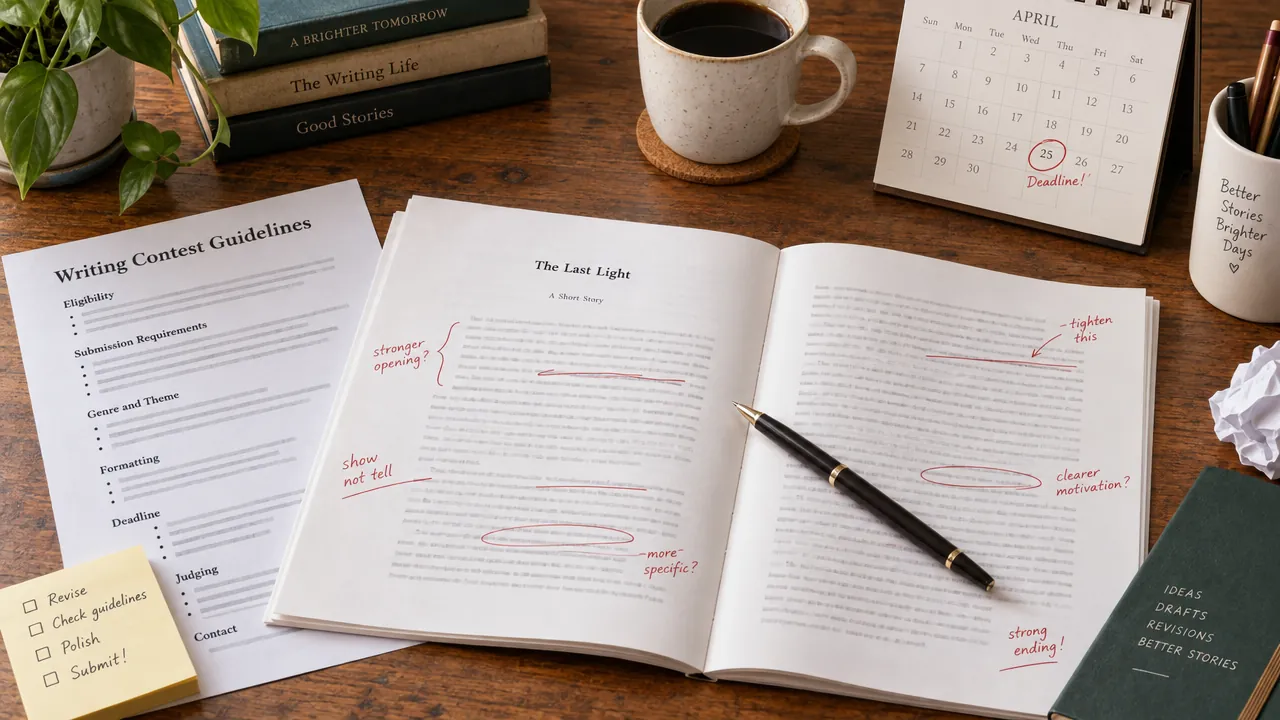
A writing contest can provide a deadline that helps you finish a short story, especially if you have been struggling to get past an unfinished draft. Preparing an entry also gives you a reason to practise writing and revision. There is no dependable formula for winning: a story needs to meet the contest’s requirements, but the final judgement remains subjective. The approaches below focus on the story itself, from building a character to making the ending feel earned.
Check the requirements before revising
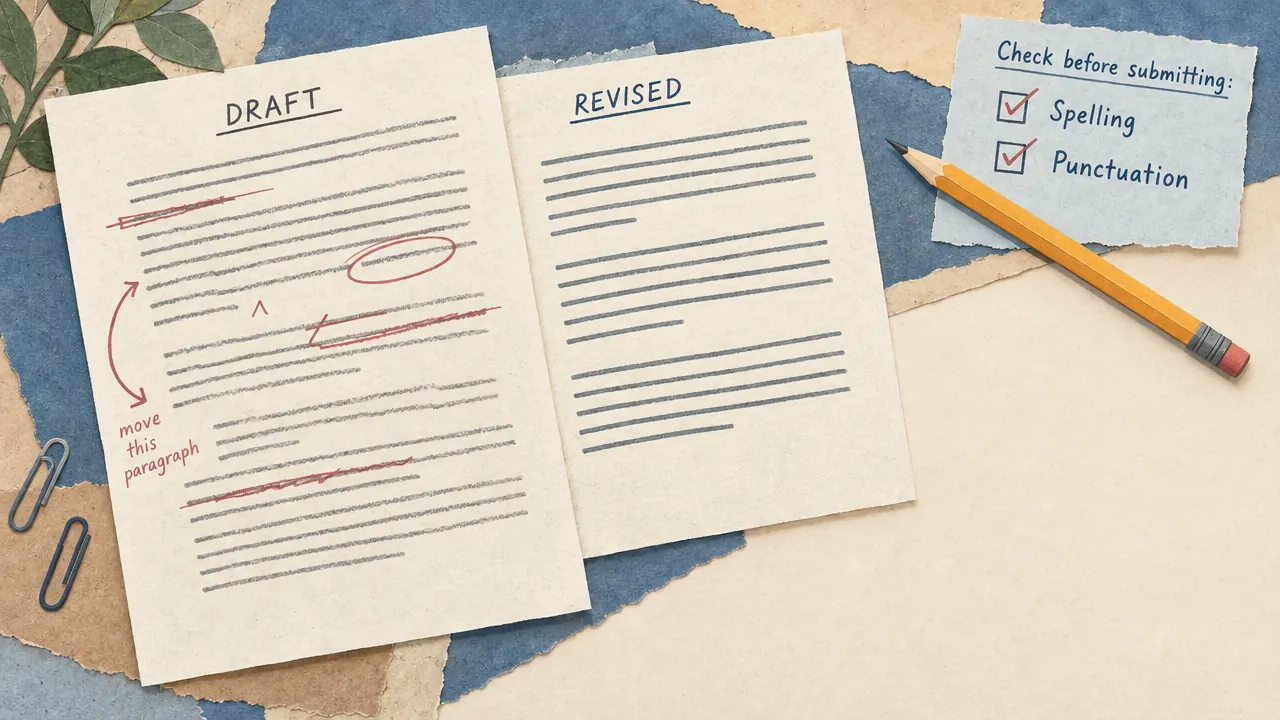
Read the contest guidelines before you settle on a final draft, then check them again before submitting. Proofread the story as well as you can. A stray typo or occasional grammatical slip may not obscure an otherwise effective piece, but frequent errors can interrupt the reader and make the prose harder to follow. Check grammar and punctuation alongside spelling rather than relying on a single quick read-through.
Pay particular attention to the word limit. A 2,500-word story does not fit a contest asking for entries of 1,500 words or fewer. Cutting a draft to the required length may take more than removing a few sentences: you may need to decide which scenes, details and exchanges the story can do without. If there is an entry fee, checking the limit first also avoids paying to submit a story that does not meet this basic condition.
Check the required genre, theme and any prompt. A literary fiction story is unlikely to suit a contest specifically seeking supernatural romance, however well written it is. If a genre is not stated, previously published stories from that contest may offer a sense of its usual direction, though they cannot tell you what any individual judge will choose. Make sure a required theme is part of the story rather than something you mention only in passing. Meeting these conditions gives an entry a fair chance to be considered; it cannot secure a prize.
Develop the story
Once the practical limits are clear, turn to the choices a reader will notice on the page. The following five approaches can help you decide what to strengthen in a draft. They are possibilities to test against your particular story, not a checklist that every short story must satisfy.
Accept that judging is subjective
Even a carefully revised story may not suit a particular judge’s taste. A result can reflect the judge’s experience and preferences as well as luck; it is difficult to predict that response while writing. Aim to make the piece as clear and compelling as you can within the rules, rather than trying to guess what every judge wants. A deadline can still help you finish, and feedback, when available, may give you material for a later revision. Whatever the result, you can take what you learnt from finishing one story into the next.
Give the main character a tension
Contrast can give a character more than one side for the reader to discover. A hero might confront cruelty in the world while struggling with their own faults. A person who usually behaves badly might be drawn towards an unexpected act of kindness. Conflict can also set a character against illness, a threatening opponent or the dullness of a life they want to change. Smaller oppositions, such as love and loss or neatness and disorder, can matter just as much.
Look for a tension that affects what your main character does, not merely how you describe them. If they want one thing but fear what it will cost, the contrast can shape a choice within the limited space of a short story. The aim is not to label a character good or evil, but to find a pressure that reveals something about them.
Prepare any surprise ending
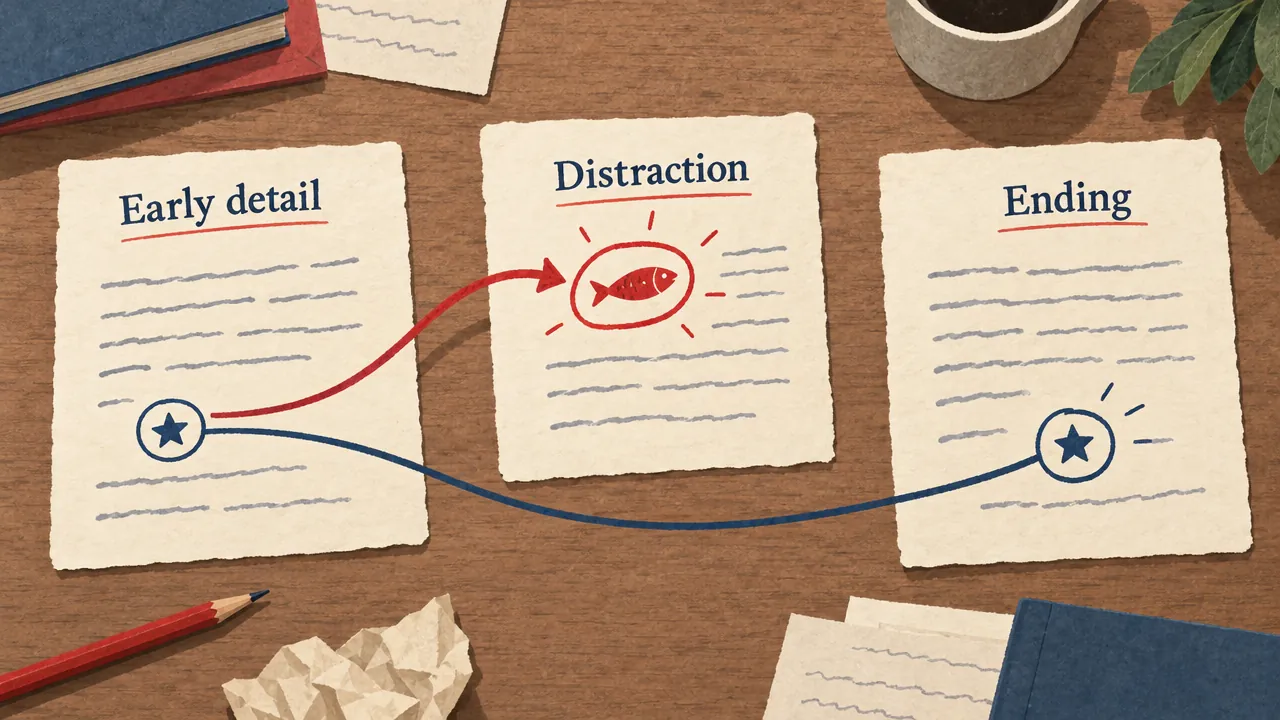
A surprise ending is one option, not an obligation. If you use one, give the reader a way to recognise afterwards how it was possible. An early detail may carry a second meaning, while a red herring draws attention elsewhere. That is different from withholding everything needed to understand the ending. A final revelation with no preparation can feel arbitrary, even if it is shocking. When revising, look back from the last lines and ask whether the story has quietly made room for them.
Bring something back with a twist
Another way to shape an ending is to return to an image, action or character from earlier in the story, but let its meaning change. Snow falling at the start might still be falling at the close, when the character sees it differently. If someone eats with his wife at a diner in the opening scene, he might return to the same table alone at the end. Or a person introduced briefly near the beginning might appear again in a changed situation.
The repetition helps the final lines connect with what came before. The twist matters because it shows what has shifted: a relationship, a hope or the character’s understanding of an event. An echo does not need to explain the whole story. It can simply give the reader a concrete point of comparison between its beginning and its end.
Use what you know, including what you imagine
“Write what you know” can be useful advice if it prompts you to notice details you understand rather than borrowing a setting wholesale from familiar stories. The source describes a contest entry by a Brazilian writer about American children driving around, eating hamburgers and attending prep school; the concern was that the story seemed drawn from American television rather than close observation. That does not mean writers must stay within their own country or personal history.
Ursula Le Guin made the counterpoint through her imaginary countries, alien societies, dragons and wizards: invented places can also be things a writer knows deeply. Research, imagination and attention to how a world works can support a story about events that never happened. Ask which details feel understood and specific, and which have arrived only because you have seen them repeated elsewhere.
Revise, then move to the next story
Read the draft with its ending in mind. Check that the character’s choices have room to develop, that any final turn has support earlier in the story, and that details you repeat have a purpose. Then proofread and compare the finished version with the contest rules once more. No amount of revision guarantees a particular result, but completing this process gives you a finished story and practice you can carry into another one.
A fifteen-minute character exercise
Spend fifteen minutes creating two characters with a strong contrast between them. Write one paragraph describing the first and another describing the second. The contrast could lie in what they want, what they fear or how they respond to the same difficulty. Afterwards, consider whether either paragraph hints at a choice the character might have to make. You can use that tension as a starting point for a short story, or bring it back to a draft whose main character still feels indistinct.